Chemical risk assessment for SMEs
Helping French SMEs evaluate chemical risks independently, through scientific UX design
Project
End-to-end product design
Team
PM, CPO, Devs, Toxicologists
Timeframe
Jan 2024 - Oct 2025
The Problem
A Critical Gap in Workplace Safety
Chemical products are the second cause of occupational illness in France. Yet compliance remains dangerously low, and existing solutions fail to address the real needs.
Compliance Gap
3%
/ 30%
Only 3% of the 30% of companies legally required to assess chemical risks actually comply
Annual Health Impact
1,800
Cancer cases per year caused by workplace chemical exposure in France
Support System
Overwhelmed
Health services legally responsible for supporting companies lack scalable tools
Competitor Analysis
Existing Tools Fall Short
Our research revealed significant gaps in the current market landscape
Seirich
Governmental Tool
Too complex and not user-friendly. Requires expert knowledge to navigate effectively.
Technical Solutions
Industry Tools
Overly technical language and complex interfaces inaccessible to non-specialists.
Premium Options
Consulting Services
Prohibitively expensive for small and medium-sized companies with limited budgets.
Project Goals
Dual Mission
For Companies
Design a scientifically accurate, intuitive and autonomous product for small and medium-sized companies, enabling them to complete a chemical risk assessment without expert assistance.
For Health Services
Help occupational health services: identify high-risk companies faster, reduce support time and provide better and more timely follow-up.
CHALLENGES
Key contraints
Complex Scientific Model
Complex scientific model (INRS method) to translate into UX
Diverse Audience
Target audience ranged from toxicologists to HR generalists
Balance Accuracy & Simplicity
Balancing scientific accuracy with simplicity
MY ROLE
Design ownership
Participated to the product definition & prioritization with PM & CPO and worked closely with devs to ensure feasibility and timelines
Ran benchmarks, extracted insights from existing tools
Designed 3 of the 4 workflow steps, from discovery and flows to prototypes and shippable UI specs.
Partnered with the DS team to keep Eva compliant and defined new reusable patterns/components.
Participated in 3 beta testing phases with 3 occupational health services and led user interviews + usability tests (6 companies), resulting in key usability issues resolved
The solution
A guided 4-step workflow
We turned a complex, high-stakes assessment into a clear sequence of small decisions, so users always know where to start, what to do next, and what “done” looks like.
Step 1
SDS Analyzer
Users upload all their Safety Data Sheets (SDS) and the product automatically reads the PDFs, extracts the data and lets users review and correct it
Step 2
Employee Grouping
Companies organize employees into exposure groups, matching the right people to the right chemical risks based on their work environment and tasks.
Step 3
Risk Evaluation
The system evaluates risk levels for each employee group based on exposure data, using the scientifically validated INRS methodology.
Step 4
Action Plan
Based on the risk evaluation, the platform generates a comprehensive action plan with specific, prioritized recommendations to reduce chemical exposure.
Step 1
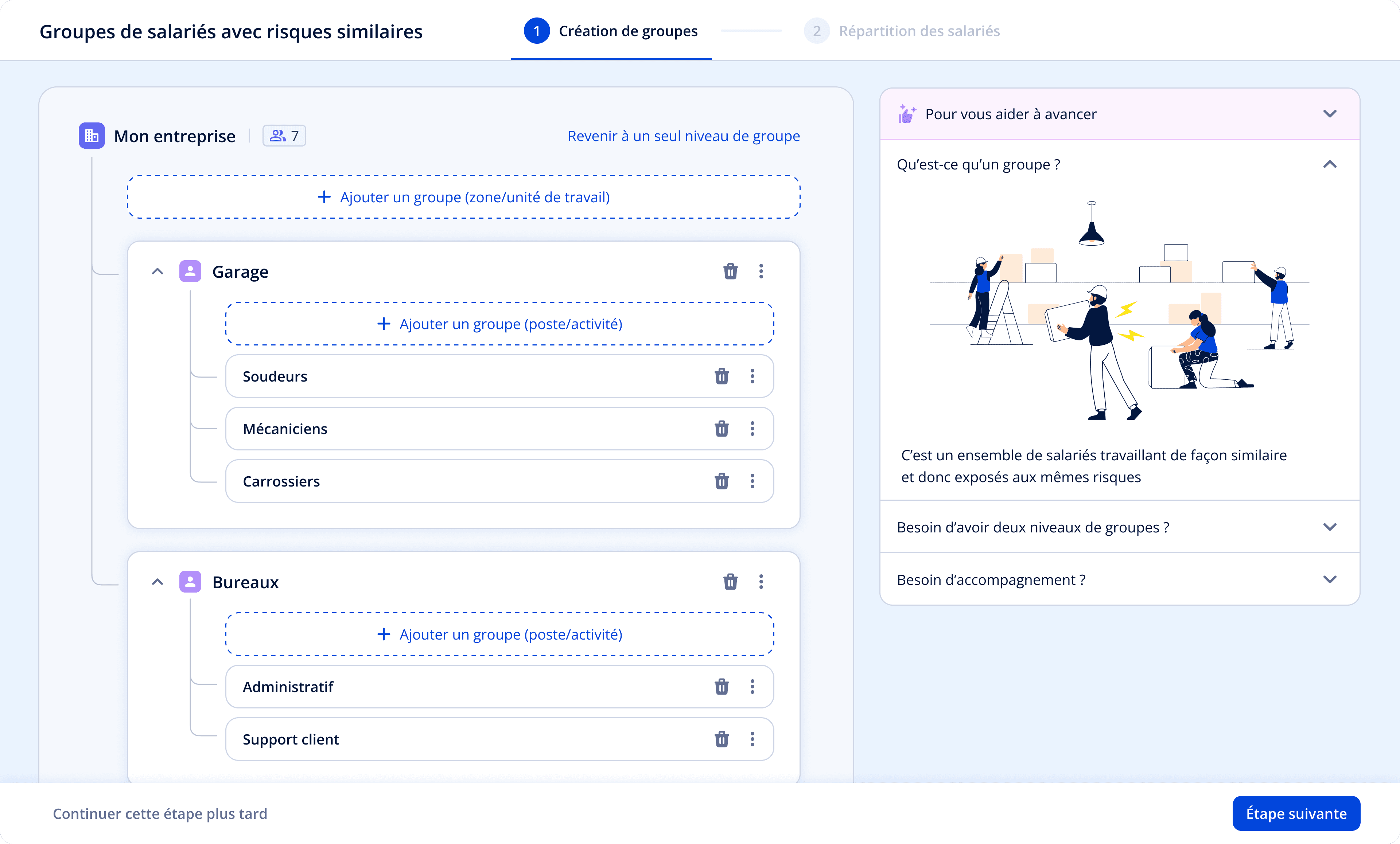
Employee Grouping
Enable companies of all sizes to quickly associate chemical risks with the right groups of employees, without requiring safety expertise.
Initial Observations & Research
Large companies needed detailed structures, while smaller ones needed simplicity
Starting from a blank page felt unnecessary and time-consuming
Key Decisions
Allowed users to reuse existing company structures from other parts of the application
Designed a 2-level grouping system adaptable to company size
Introduced filters and bulk actions to simplify employee assignment
User Insights
4.3/5
Avg. NPS (6 users)
"Simple and fast — Much clearer and more usable than Seirich."
Iterations & Next Steps
Implemented automatic deselection of employees once assigned
Improved visual feedback and validation messages
Automatically suggest only the groups exposed to chemical risk when importing
Step 2
Risk Evaluation
Allow non-expert users to evaluate chemical risks accurately while strictly respecting the scientific methodology.
The problem : input tasks manually without guidance. Beta testing revealed they hesitated, didn't know what to write, and couldn't move forward.
BEFORE
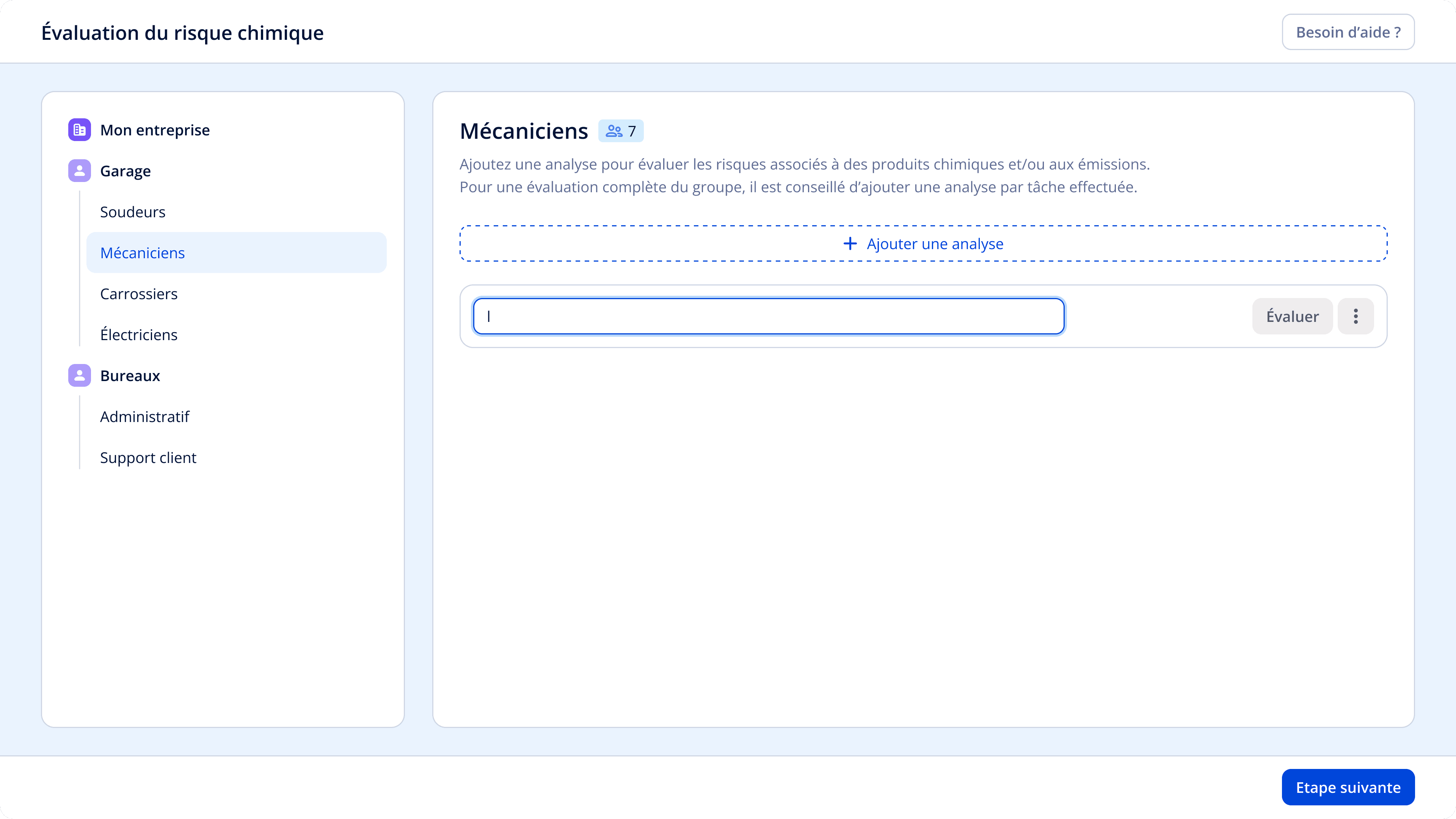
Empty input field: users were stuck not knowing what tasks to add.
AFTER
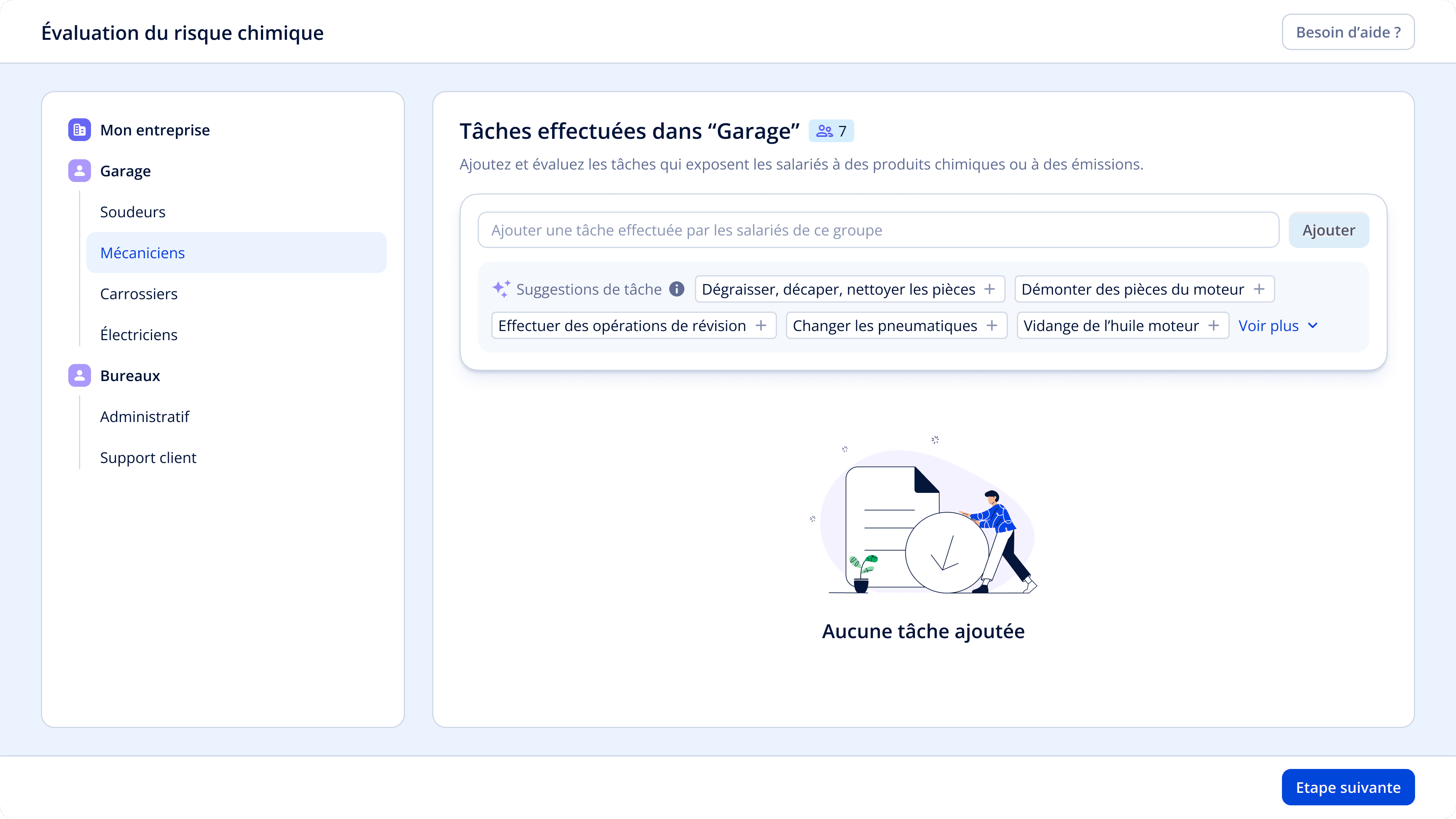
Task suggestions with one-click add buttons: users moved through much faster.
key design decisions
Job-specific content
Contextual suggestions based on
employee group role
One-click add
Quick addition with "+" button to reduce
friction
Visual distinction
Suggestions styled differently from
added tasks to prevent confusion
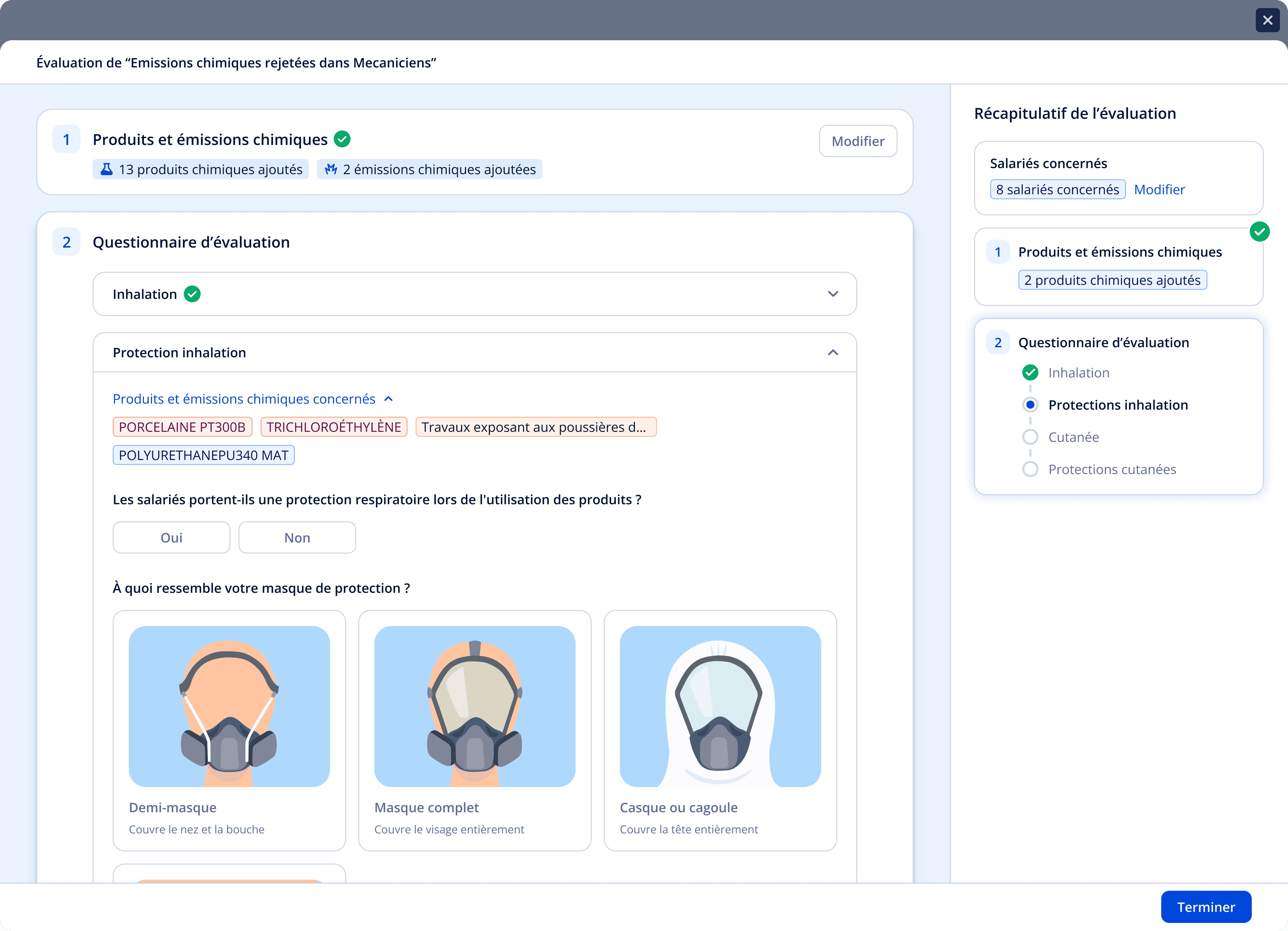
Complex method → Progressive disclosure
Hypothesis : Scientific methodology is non-negotiable, but we can improve the experience.
Decision : One section at a time, side progress tracker, contextual examples—maintained accuracy without expert-only UI.
Users feedback : Very positive on clarity and digestibility; visual design reduced overwhelm significantly.
Lack of transparency → Explained result
The problem : users didn't understand the result of the evaluation. They were left guessing what answers had the biggest impact on their risk score.
BEFORE
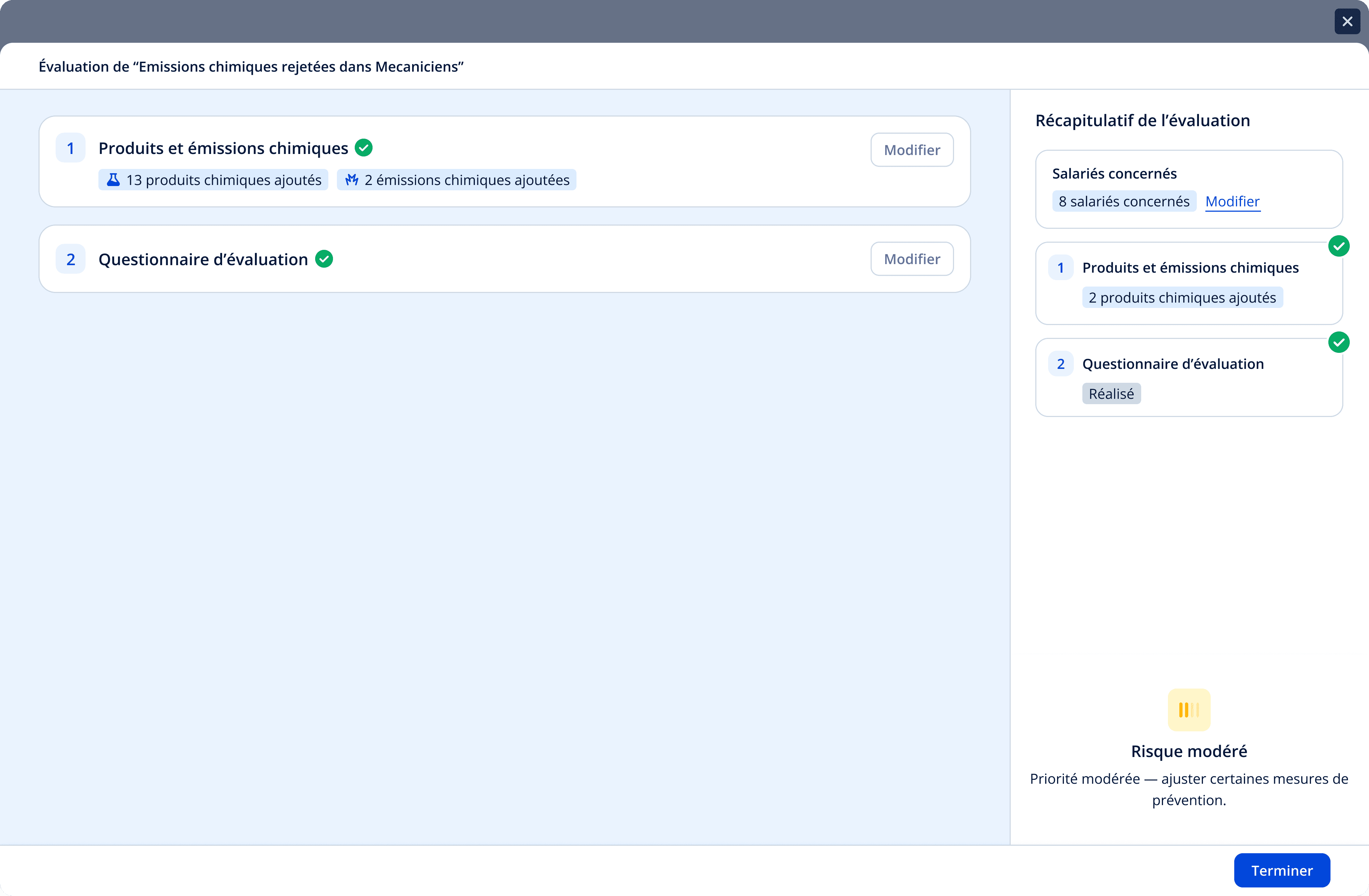
Simple score display: users didn't understand what drove the result or what to improve.
AFTER
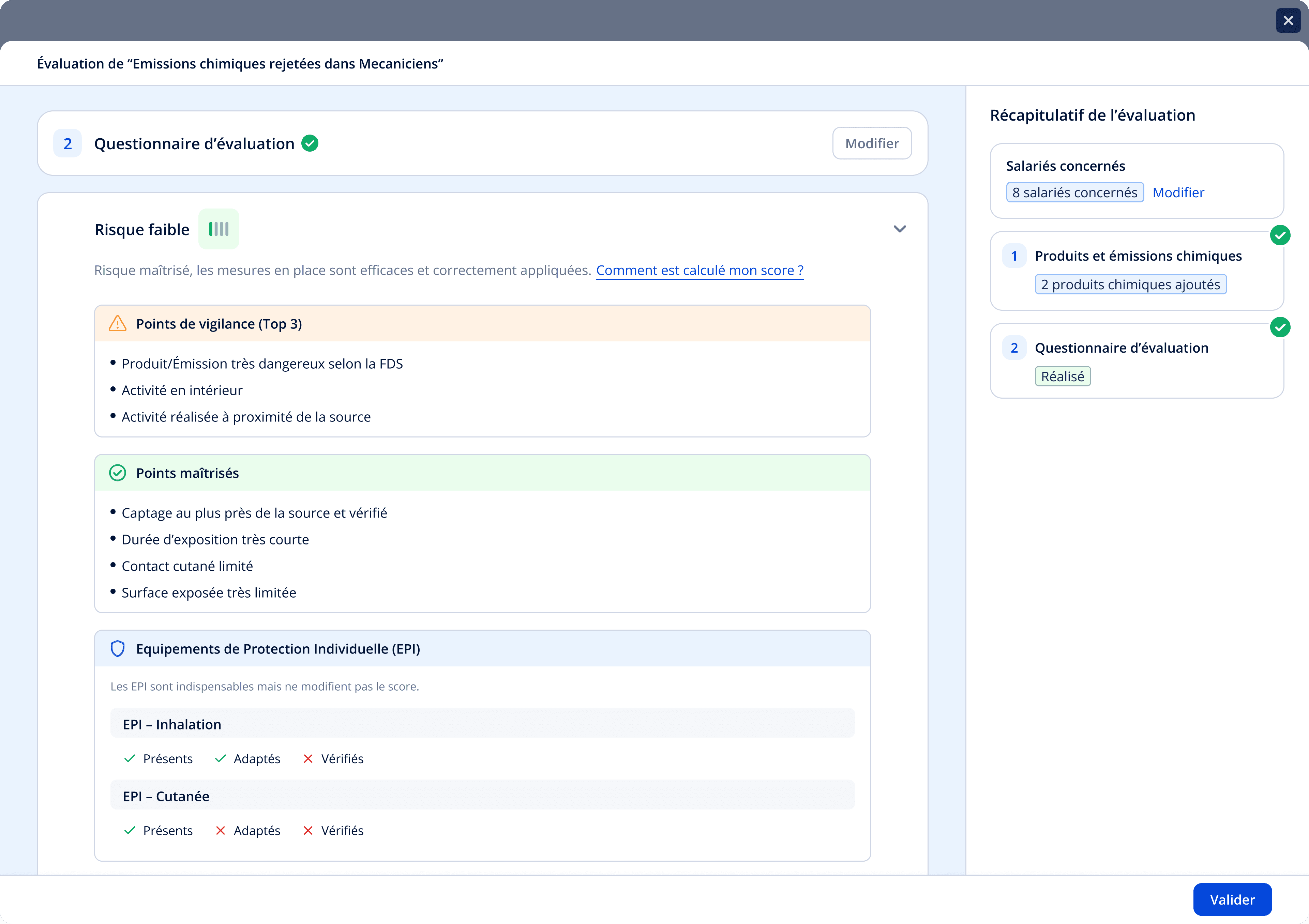
In-product score explainer showing top 3 drivers, positive factors, and equipment status: transparency without overwhelm.
key design decisions
Top 3 drivers only
Show what's working
Equipment context
User Insights
3/5
Avg. NPS (expected for a scientifically complex step)
"Simple and fast — Much clearer and more usable than Seirich."
Iterations & Next Steps
Built a dedicated risk score explanation feature with top 3 risk factors and clear visual hierarchy
Created a task suggestion feature, tailored to the company's sector, to help users start from concrete examples
Step 3
Action plan
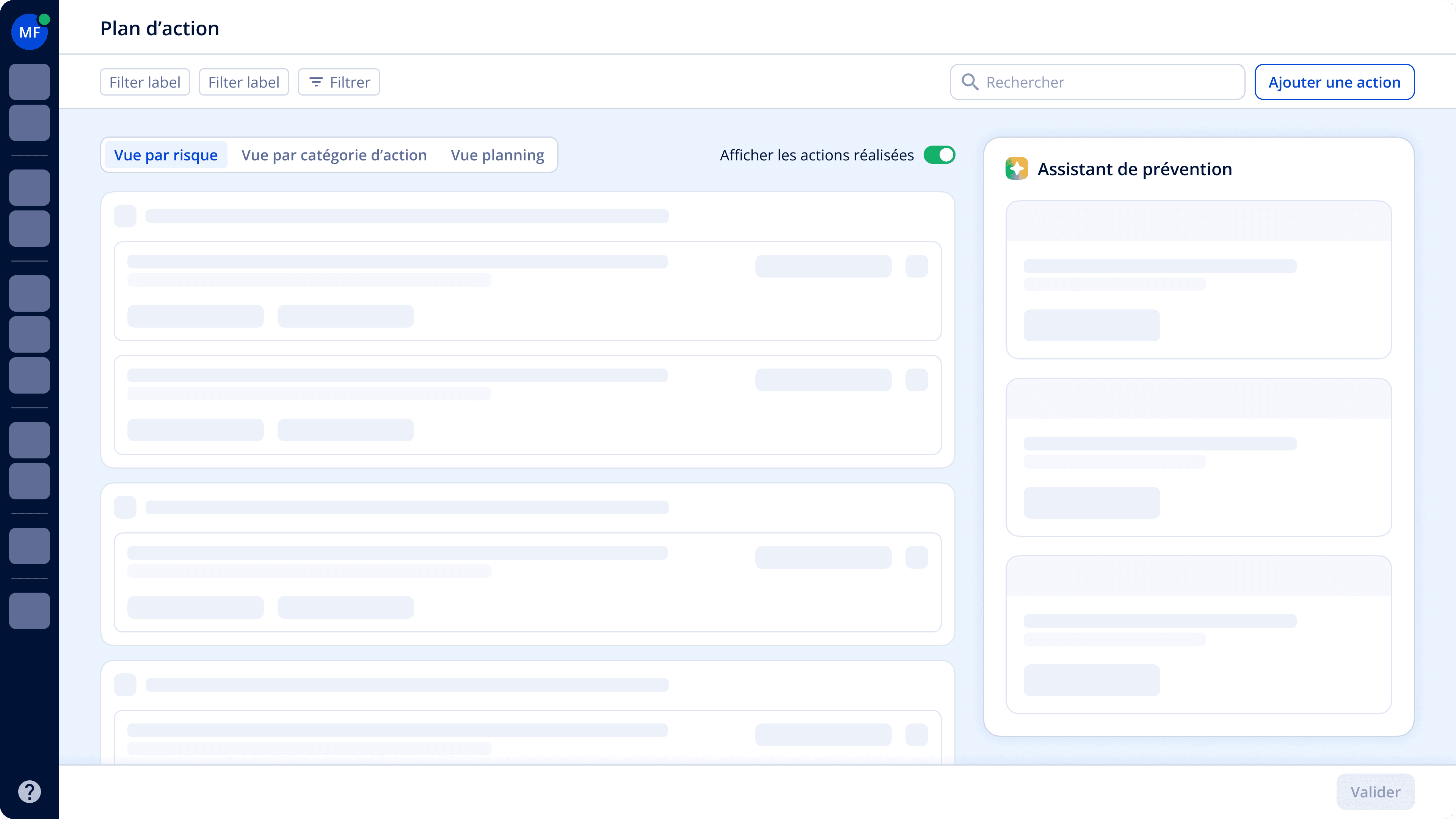
Help companies focus on what really matters: a small, high-impact action plan that can realistically be implemented.
Initial Observations & Research
Many companies already had generic action plans, but nothing specific to chemical risks
Users expected clear guidance, not another document to fill
Health services strongly emphasized that execution matters more than exhaustiveness
Key Decisions
Designed a Prevention Assistant as the core of the experience
Automatically ranked risks by severity, displayed only top 3 most critical risks by default
Generated highly specific prevention actions based on questionnaire answers
Clearly displayed the expected impact of each action on the risk level
User Insights
3.7/5
Avg. NPS (6 users)
"I like seeing the impact of each action."
Iterations & Next Steps
Improved visibility of the prevention assistant
Focus on addressing users' need for interoperability with existing tools and action plans
Outcomes
Impact & Results
MVP Validated
By toxicologists and non-specialist users
~70% Reduction
FDS parser reduced manual input during inventory
1 confirmed adoption
1 Health service representing 4,000 companies confirmed adoption
Q1 2026 Launch
Final product ready for launch